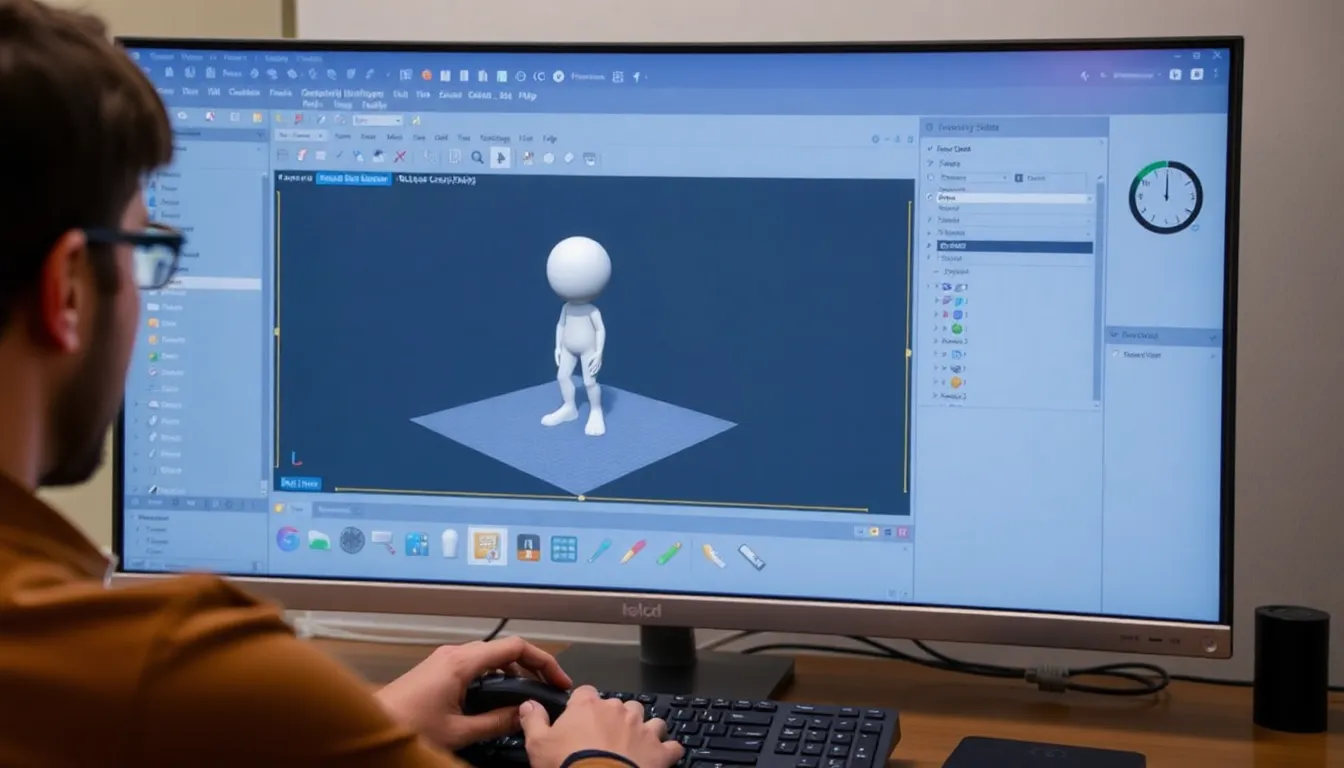
In the world of digital creation, 3D modeling with Blender is like discovering a secret weapon. Imagine sculpting your wildest ideas into reality with just a few clicks—no magic wand required! Whether you’re an aspiring artist or a seasoned pro, Blender’s powerful tools and user-friendly interface make it a favorite among creators.
But wait, there’s more! Blender’s community is as vibrant as a rainbow unicorn at a candy convention. With endless tutorials and support, mastering this software feels less like climbing Mount Everest and more like breezing through a sunny park. So, buckle up and get ready to dive into the exciting realm of 3D modeling—where imagination knows no bounds and the only limit is how many coffee breaks you can take.
Overview of 3D Modeling Blender
Blender serves as one of the most versatile tools for 3D modeling, catering to both novices and seasoned professionals. Its extensive feature set includes modeling, texturing, rendering, and animation capabilities. Users can create complex 3D models with its intuitive interface that promotes creativity.
Accessing Blender’s numerous resources makes mastering this software easier. The vibrant community produces countless tutorials and documentation that guide users through workflows. Learning materials cover everything from basic modeling techniques to advanced sculpting methods.
Blender supports various file formats and seamlessly integrates with other software, expanding its usability. Artists often utilize Blender to design assets for games, animations, and visual effects. The real-time rendering engine, Eevee, delivers stunning visuals, while the Cycles engine paves the way for photorealistic effects.
Tools such as the Grease Pencil facilitate 2D animation within a 3D space, offering unique creative opportunities. Community contributions lead to constant improvements and feature updates. Blender’s open-source nature encourages development, allowing users to customize and share plugins, enhancing functionality.
Customization options enable artists to personalize their workflow fully. As a free tool, Blender reduces barriers to entry, making 3D modeling accessible to everyone. Collaboration within the community fosters initiatives that expand knowledge and artistic ability.
Discovering these features opens a new realm for creative expression, encouraging exploration and innovation. 3D modeling with Blender not only inspires artistic vision but also empowers creators to bring their ideas to life.
Getting Started with Blender
Starting with Blender is straightforward and accessible for all skill levels. Familiarity with its features enhances the 3D modeling experience.
Installing Blender
Download the latest version of Blender from the official website. Choose the appropriate installer for your operating system, whether Windows, macOS, or Linux. Launch the installer once the download completes. Follow the on-screen instructions for seamless installation. After installation, start Blender and explore its interface. Users can access updates regularly to benefit from new features and improvements. Engage with the community to learn about add-ons that enhance functionality.
User Interface Overview
The Blender interface features a customizable layout designed for efficiency. Fundamental components include the 3D viewport, toolbar, and properties panel. Users navigate the workspace using keyboard shortcuts, which streamline processes. Rethinking layouts helps adapt workflows to individual preferences. Panels can be resized or rearranged to optimize the user experience. Various workspaces, such as modeling, sculpting, and animation, provide specific tools tailored to each task. Familiarizing oneself with these elements fosters confidence in navigating Blender’s powerful capabilities.
Basic 3D Modeling Techniques
Blender offers various basic techniques crucial for effective 3D modeling. Understanding these techniques lays the foundation for creating intricate designs.
Creating Simple Shapes
Blender allows users to create basic shapes like cubes, spheres, and cylinders quickly. Accessing the “Add” menu provides these primitive objects, serving as building blocks for more complex models. Selecting an object reveals additional options that enable adjustments to dimensions and proportions. Using the modifier stack enhances these basic shapes without permanent alterations. Users can combine multiple objects, creating unique geometries and experimenting with various forms. Transitioning from simple shapes to more advanced structures occurs naturally through practice and exploration of Blender’s features.
Modifying Objects
Modifying objects in Blender involves employing a range of tools and modifiers. Transform tools like move, rotate, and scale alter object properties swiftly. The properties panel provides precise control over dimensions and transforms through numerical input. Using the Edit Mode enables users to manipulate vertices, edges, and faces directly for fine-tuning designs. Modifiers such as Subdivision Surface smooth out shapes, enhancing visual quality. Applying materials enhances the aesthetic appeal, allowing users to experiment with colors and textures effectively. Overall, these modification techniques expand the creative possibilities within Blender, inviting experimentation and innovation.
Advanced 3D Modeling Features
Blender includes advanced features that elevate 3D modeling capabilities, allowing users to create detailed and intricate designs.
Sculpting Tools
Sculpting tools in Blender enable users to reshape models with precision. Dynamic topology allows for real-time sculpting adjustments, enhancing detail in organic forms. Brushes such as Grab, Smooth, and Clay provide diverse functionalities, catering to various sculpting needs. Users can adjust brush settings, including size and strength, for tailored results. In addition, symmetry options assist in creating balanced designs effortlessly. Efficient use of these tools streamlines the workflow and facilitates creativity, making complex shapes more achievable.
Texturing and Materials
Texturing and materials in Blender play crucial roles in achieving lifelike surfaces. Users can create textures within the Shader Editor, which offers an expansive node-based system conducive to experimentation. Image textures, procedural textures, and UV mapping options ensure flexibility in design. Applying materials involves setting properties like color, roughness, and metallic values for realistic finishes. Built-in texture painting tools aid in direct application onto models, enhancing customization. These features make it simple for users to achieve professional results, transforming 3D models into visually compelling assets.
Rendering Your 3D Models
Effective rendering enhances the visual appeal of 3D models. In Blender, achieving high-quality renders relies on proper setup of lights and cameras alongside export options for various formats.
Setting Up Lights and Cameras
Lighting plays a crucial role in achieving realism. Users can select area lights, point lights, or sun lights based on the desired effect. Adjusting intensity and color helps create mood and atmosphere within the scene. Camera positioning also influences composition. Using the camera view, they can frame scenes effectively and adjust focal length for perspective control. Depth of field settings adds realism by simulating lens focus, drawing attention to key elements while blurring the background.
Exporting Your Work
Exporting models from Blender allows sharing across various platforms. Users can choose file formats such as FBX, OBJ, and GLTF, depending on project needs. Each format offers unique advantages for specific applications. For instance, FBX preserves animations, while OBJ focuses on static models. Settings like scale and texture path ensure accuracy during the export process. Completing this step involves checking preferences to maintain compatibility with other software, ensuring seamless integration into pipelines for games, animation, or visual effects projects.
Conclusion
Blender stands out as an invaluable asset for anyone venturing into 3D modeling. Its blend of powerful features and user-friendly interface makes it accessible for all skill levels. The vibrant community surrounding Blender ensures that help is always available, fostering a collaborative learning environment.
With tools that cater to both basic and advanced techniques users can refine their skills and explore their creativity without limitations. Whether creating assets for games or crafting intricate animations Blender offers the versatility and quality needed to bring visions to life. Embracing this software opens doors to endless possibilities in the realm of 3D art.