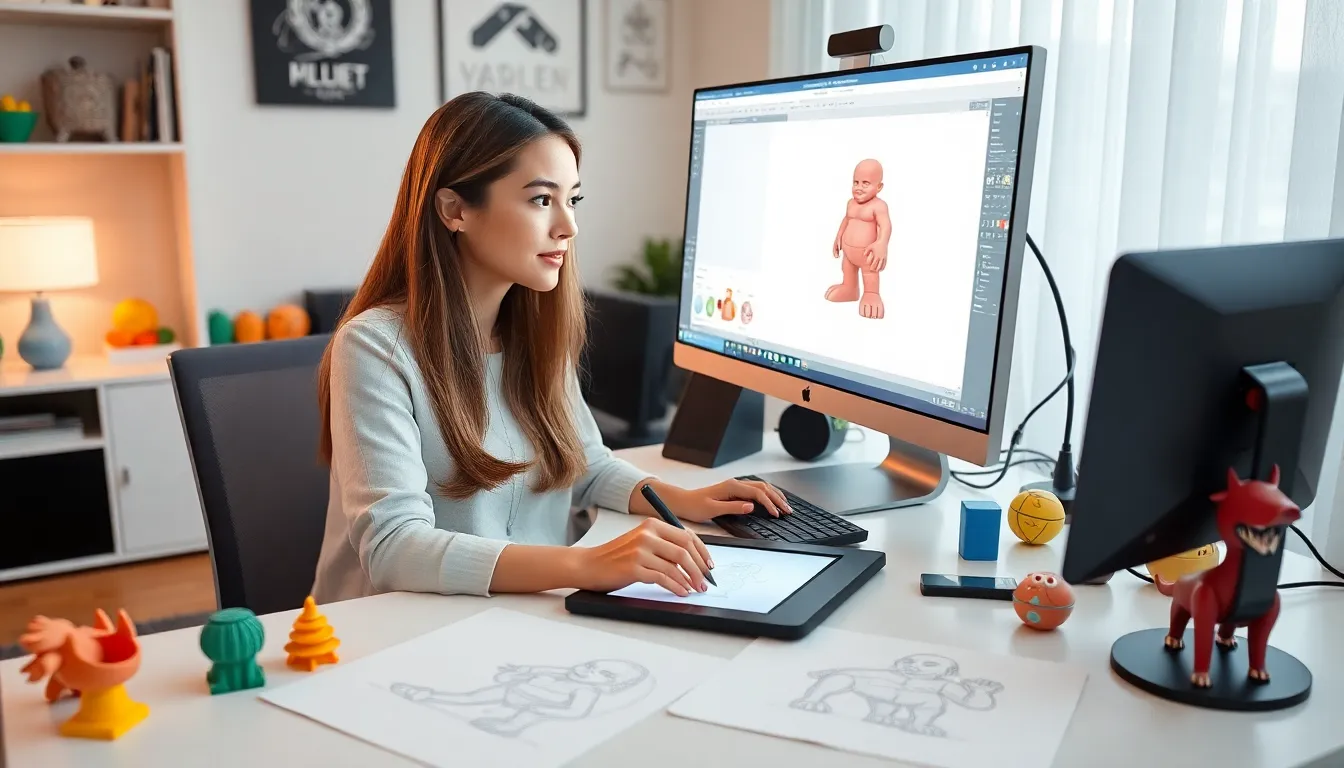
In a world where imagination meets technology, freelance 3D modeling is the secret sauce that turns dreams into digital reality. Whether it’s creating jaw-dropping animations or designing intricate game environments, these digital artists are the unsung heroes of the visual realm. They wield their software like wizards casting spells, bringing to life everything from quirky characters to stunning architectural wonders.
Overview of Freelance 3D Modeling
Freelance 3D modeling combines creativity and technical skills, where artists produce digital representations for various industries. Clients often rely on these experts to visualize products, create animations, or design immersive environments. The demand for skilled 3D modelers continues to grow as sectors like gaming, film, and architecture evolve.
Digital artists utilize advanced software tools, such as Blender, Maya, or 3ds Max, to construct detailed models. These programs provide functionalities for sculpting, texturing, and rendering, enabling creators to bring their ideas to life. Comprehensive knowledge of anatomy, lighting, and spatial relationships enhances the quality of their work.
Freelance modelers often collaborate with clients to understand project requirements. Communication plays a critical role in ensuring alignment between artistic vision and client expectations. Regular feedback encourages iterative improvements, leading to polished final products.
Portfolio development remains vital for freelancers in this space. Displaying a diverse range of work showcases their abilities and attracts potential clients. Participation in online platforms like ArtStation or Behance can increase visibility and open up new opportunities.
Market rates for freelance 3D modeling vary based on experience and complexity of projects. Beginners may charge between $20 to $50 per hour, while experienced professionals can command rates exceeding $100 per hour. Clients typically look for value in quality and turnaround time, making timely deliveries crucial.
Leveraging platforms such as Upwork or Fiverr helps modelers tap into a broader market. Many freelancers find success by maintaining a strong online presence and engaging in supportive communities. Embracing trends and continuously updating skills ensures relevancy in this competitive field.
Skills Required for Freelance 3D Modeling
Freelance 3D modeling demands a mix of technical and soft skills to succeed in various industries. Understanding these skills enhances a modeler’s ability to create captivating digital works.
Technical Skills
Proficiency in advanced software tools like Blender, Maya, and 3ds Max serves as a foundation for 3D modelers. Knowledge of 3D modeling techniques, topics like polygon modeling, and sculpting techniques improve a modeler’s expertise. Familiarity with texturing, shading, and lighting influences the realism of digital representations. Understanding anatomy, both human and animal, aids in creating accurate character models. Mastery of rendering techniques impacts the visual quality of final products. Staying updated with software advancements ensures competitiveness in the market.
Soft Skills
Communication with clients plays a vital role in 3D modeling projects. Active listening facilitates understanding client needs and expectations. Problem-solving abilities enable modelers to address challenges effectively during the creative process. Collaboration with other artists and professionals fosters a cohesive project approach. Time management skills ensure the timely delivery of projects. Adaptability allows modelers to embrace changing requirements and industry trends. Building a positive rapport with clients promotes repeat business and referrals.
Building a Portfolio
A strong portfolio showcases a freelance 3D modeler’s skills and creativity. Showcasing work effectively attracts potential clients and highlights individual style.
Tips for Showcasing Your Work
Focus on quality over quantity in portfolio selection. Display a range of projects that emphasize versatility, including character models, environments, and textures. Choose high-resolution images or animations that capture attention. Narrative descriptions enhance context, explaining the project’s goals and techniques. Regular updates reflect growth and adaptation to industry trends. Engaging presentations, such as video reels, increase viewer interaction. Incorporating testimonials or client feedback adds credibility.
Platforms for Portfolio Display
Select platforms that maximize visibility and reach. ArtStation serves as a popular choice among 3D artists, offering networking opportunities and industry exposure. Behance allows for creative project showcase and collaboration with other artists. LinkedIn and personal websites provide professional presence and direct client connections. Utilizing social media, such as Instagram and Pinterest, broadens audience engagement. Regularly sharing work on these platforms fosters community interaction, leading to potential projects and collaborations.
Finding Freelance Opportunities
Freelance 3D modelers can discover numerous opportunities through various channels tailored to their skills and experience.
Job Boards and Websites
Job boards like Upwork and Freelancer cater specifically to freelancers. These platforms allow modelers to create profiles and showcase their work. Search filters help refine results based on project type and budget. Many employers list specific requirements, enhancing alignment between client needs and artist capabilities. Other websites like LinkedIn also post freelance opportunities in this field. Dedicated 3D modeling websites, such as CGTrader and TurboSquid, enable professionals to sell models directly. Regularly checking these job boards is essential for finding the latest opportunities.
Networking and Social Media
Networking emphasizes connections within the industry. Attending events or joining online groups fosters relationships with peers and potential clients. Platforms like Instagram and Twitter allow modelers to share their work while engaging with a broader audience. Regular interaction can lead to project referrals and collaborations. Engaging with industry-specific forums also builds visibility. Participating in discussions and sharing insights can attract attention. These communications help establish credibility and trust, essential for gaining freelance work. Being active on multiple platforms ensures comprehensive outreach.
Pricing Your Services
Setting competitive pricing for freelance 3D modeling requires careful consideration. It impacts income and client perceptions directly.
Factors Influencing Pricing
Client budgets, project complexity, and the modeler’s experience all shape pricing decisions. The target industry plays a significant role; for instance, gaming clients might offer different rates compared to architectural firms. Modelers specializing in specific niches, like character modeling or architectural visualization, often command higher fees due to their expertise. Geographic location can also influence pricing, with modelers in high-cost areas typically charging more. Lastly, portfolio quality and client testimonials affect rates as established reputations warrant higher charges due to perceived value.
Pricing Strategies
Freelance modelers often adopt various pricing strategies to attract clients effectively. Hourly rates usually range from $20 to $100 depending on skill level. Flat project rates provide clarity and predictability for both parties. Offering tiered packages can appeal to diverse client needs, from basic models to highly detailed work. Discounting for bulk projects or long-term collaborations can encourage repeat business. Evaluating competitors’ pricing helps modelers remain competitive without underselling their services. Regularly revisiting pricing as experience and demand increase ensures sustainable growth in a competitive landscape.